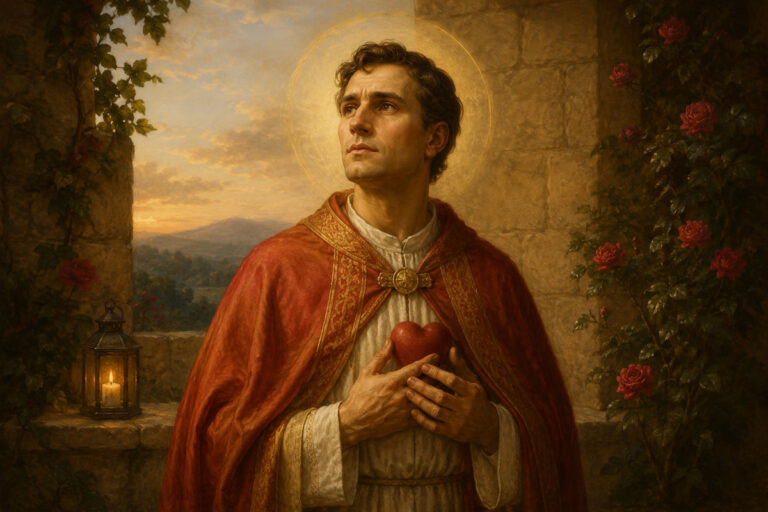
St. Peregrine Laziosi is known throughout the Church as a powerful intercessor for those facing cancer and serious illness. Yet before he became a saint of healing, he was a man of anger, pride, and rebellion. His life tells a deeply human story of conversion, suffering, and unwavering trust in God. Today, he stands as a patron of hope for the sick, the weary, and all who carry heavy crosses.
From Rebellion to Repentance
Born in Italy in 1260, Peregrine once lived far from the holiness he would later embrace. As a young man, he opposed the Church and even struck a visiting priest in anger. That priest was St. Philip Benizi, who responded not with retaliation, but with gentleness and forgiveness. That moment pierced Peregrine’s heart. Convicted and humbled, he sought forgiveness and eventually entered the Servite Order, dedicating his life to prayer, penance, and service.
“Lord, give me the grace to begin again.”
Though not a direct quotation from his writings, this simple prayer reflects the turning point of his life. Peregrine teaches us that no past is too broken for grace, and no heart is beyond redemption. His story begins with mercy — and mercy reshaped everything.
A Saint Who Suffered
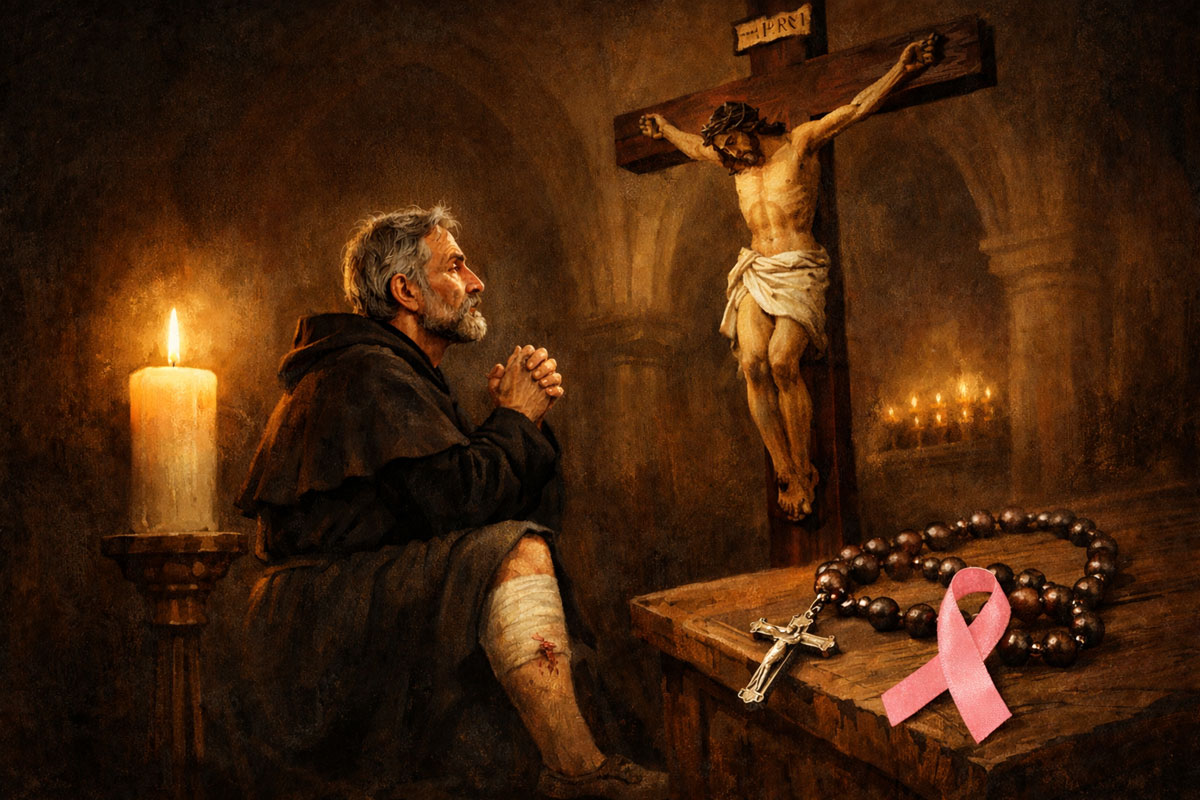
Later in life, Peregrine developed a severe illness in his leg, traditionally described as cancer. The pain was intense, and doctors determined that amputation was necessary. On the night before the scheduled surgery, Peregrine spent hours in prayer before a crucifix, surrendering himself completely to Christ. By morning, the disease had reportedly vanished. The amputation was no longer required.
Whether one focuses on the miracle or on the surrender that preceded it, the message is clear: healing begins in trust. Peregrine did not demand a miracle — he entrusted himself to God’s will. That is why he is invoked not only for physical healing, but for the strength to endure suffering with faith.
Why St. Peregrine Still Matters Today
In a world where illness often brings fear, isolation, and uncertainty, St. Peregrine speaks directly to:
- Those battling cancer or chronic illness
- Families supporting loved ones through medical trials
- Anyone struggling with fear of the unknown
- Those learning how to surrender control to God
His life reminds us that holiness is not the absence of suffering — it is faith within it. He shows us that strength can be quiet, endurance can be holy, and prayer can carry us when our bodies feel weak.
A Patron of Hope
St. Peregrine was canonized in 1726 and is often depicted with a wounded leg or standing before a crucifix. His feast day, May 1, honors not only a miraculous healing, but a life transformed by grace. Through his intercession, countless faithful continue to pray for courage, comfort, and restoration.
He stands as a reminder that even in hospital rooms and waiting areas, God is present.
Want to Walk with St. Peregrine?
Ask yourself: Where do I need healing — in body, heart, or spirit? What would it look like to trust God more deeply in this season?
For a deeper journey, you’re welcome to explore our 30-day devotional, Walking with St. Peregrine, available now. Let this gentle companion guide you through daily reflections of hope, endurance, and faithful surrender — because no suffering is ever faced alone when it is placed in God’s hands.