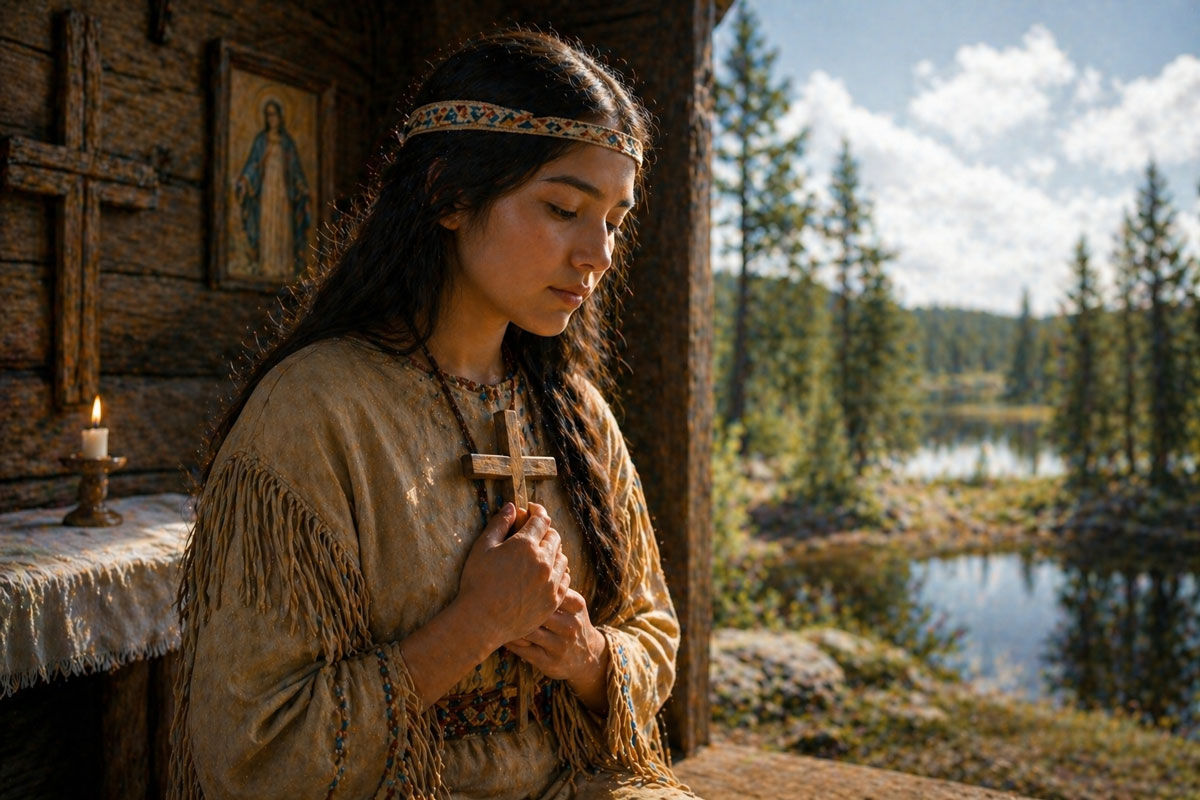
What St. Kateri Tekakwitha Meant by Belonging Entirely to Christ
“I am not my own; I have given myself entirely to Jesus.”
— St. Kateri Tekakwitha
“I am not my own; I have given myself entirely to Jesus” reflects the deep surrender and devotion that defined the life of St. Kateri Tekakwitha — a soul wholly given to God in love and trust.
Who Said “I Am Not My Own”?
This quote is attributed to St. Kateri Tekakwitha (1656–1680), the first Native American saint, known for her purity, prayerful life, and unwavering commitment to Christ despite hardship and opposition.
What Does “I Am Not My Own” Mean?
St. Kateri’s words express a profound spiritual truth: that true freedom is found not in self-possession, but in surrender to God.
To say “I am not my own” is not a loss of identity, but a transformation of it. It means that one’s life, choices, and purpose are entrusted fully to Christ.
Her statement reflects a love that is total — not divided or conditional. She chose to give everything to God, even when it meant sacrifice, rejection, and hardship.
In this surrender, Kateri found peace, strength, and a deep sense of belonging. Her life shows that when we give ourselves completely to God, we do not lose who we are — we discover it more fully.
Why This Quote Still Matters Today
In a culture that often emphasizes independence and control, St. Kateri offers a different path — one of trust, surrender, and belonging to something greater.
True freedom is found in giving ourselves fully to God.
To walk more deeply with this courageous and faithful saint, explore our 30-day devotional, Walking with St. Kateri Tekakwitha — a daily journey of purity, surrender, and devotion to Christ.