Few saints are as closely associated with animals as St. Francis of Assisi. Known for his gentle spirit, deep love of nature, and extraordinary compassion for all living creatures, Francis saw the beauty of God’s creation in everything around him. Among the many stories told about his life, one of the most beloved is the remarkable tale of St. Francis and the Wolf of Gubbio, a story that continues to inspire kindness, understanding, and peace centuries later.
The Wolf That Frightened a Town
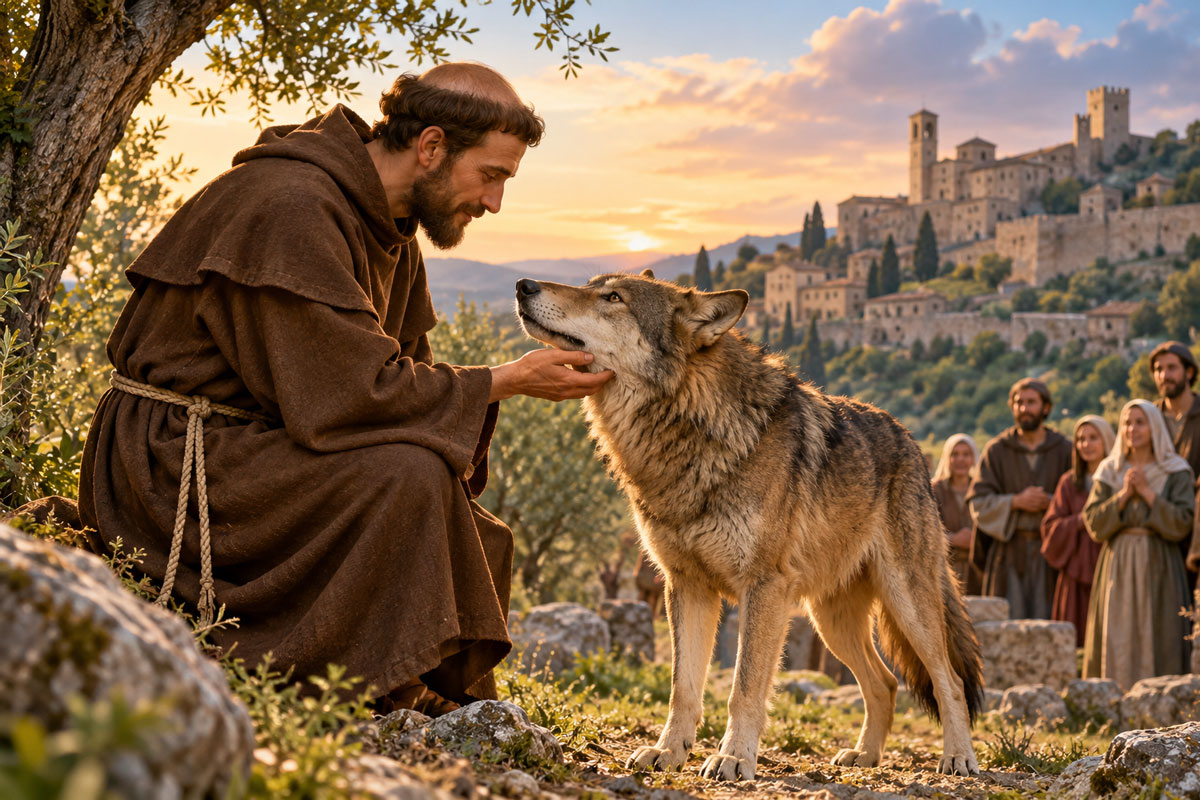
According to a centuries-old Franciscan tradition, the Italian town of Gubbio was once terrorized by a fierce wolf. The animal had attacked livestock and even threatened the townspeople, leaving everyone afraid to venture beyond the town walls. While others saw only a dangerous creature, Francis believed that peace might be possible. Despite warnings from the frightened villagers, he went out to meet the wolf. As the animal approached, Francis made the Sign of the Cross and spoke to it gently, calling it “Brother Wolf.” Rather than attacking, the wolf became calm.
Francis acknowledged the suffering the animal had caused but also recognized its hunger. He proposed an extraordinary agreement: the townspeople would provide food for the wolf, and in return, the wolf would no longer harm them. According to the story, the wolf accepted, and peace returned to Gubbio. What had begun as a frightening encounter became a lasting symbol of reconciliation, reminding generations that compassion can sometimes succeed where fear and hostility have failed.
Seeing God’s Creation with Love
Whether understood as a historical event or a cherished spiritual tradition, the story reflects something central to Francis’s life: his belief that all creation deserves kindness and respect. Francis did not see animals simply as creatures to be feared, used, or ignored. He regarded them as fellow inhabitants of a world lovingly created by God, each with its own place and purpose. His affection for birds, wolves, and other creatures reflected his profound gratitude for the beauty and wonder of the natural world.
Yet Francis’s compassion extended far beyond animals. He devoted himself to serving the poor, comforting the sick, and embracing those who had been forgotten by society. For Francis, love was not merely something to speak about or admire from a distance. It was something to practice every day through humility, generosity, and simple acts of kindness.
What St. Francis Teaches Us Today
The Wolf of Gubbio reminds us that fear and conflict do not always have to end in violence. Sometimes understanding, patience, and compassion can open the door to peace. Francis’s willingness to approach a creature everyone else feared challenges us to look beyond appearances and consider the needs of others, even when doing so requires courage.
His example also encourages us to care for animals, appreciate the beauty of nature, and recognize the responsibility we share for protecting God’s creation. Whether through caring for a beloved pet, helping an animal in need, or simply treating the natural world with greater respect, we can carry something of Francis’s gentle spirit into our own lives. His message remains as meaningful today as it was centuries ago: even the smallest act of kindness can make the world a more peaceful place.
Discover More Saints Who Loved Animals
The beautiful story of St. Francis and the Wolf of Gubbio is just one of the remarkable traditions featured in Saints Who Loved Animals, an illustrated collection celebrating the special connections between beloved saints and God’s creatures. Through beautiful artwork, engaging stories, and gentle lessons of faith, this book invites readers of all ages to discover how compassion for animals can bring us closer to God.
Discover Saints Who Loved Animals and explore more inspiring stories of faith, kindness, and friendship throughout God’s creation.