
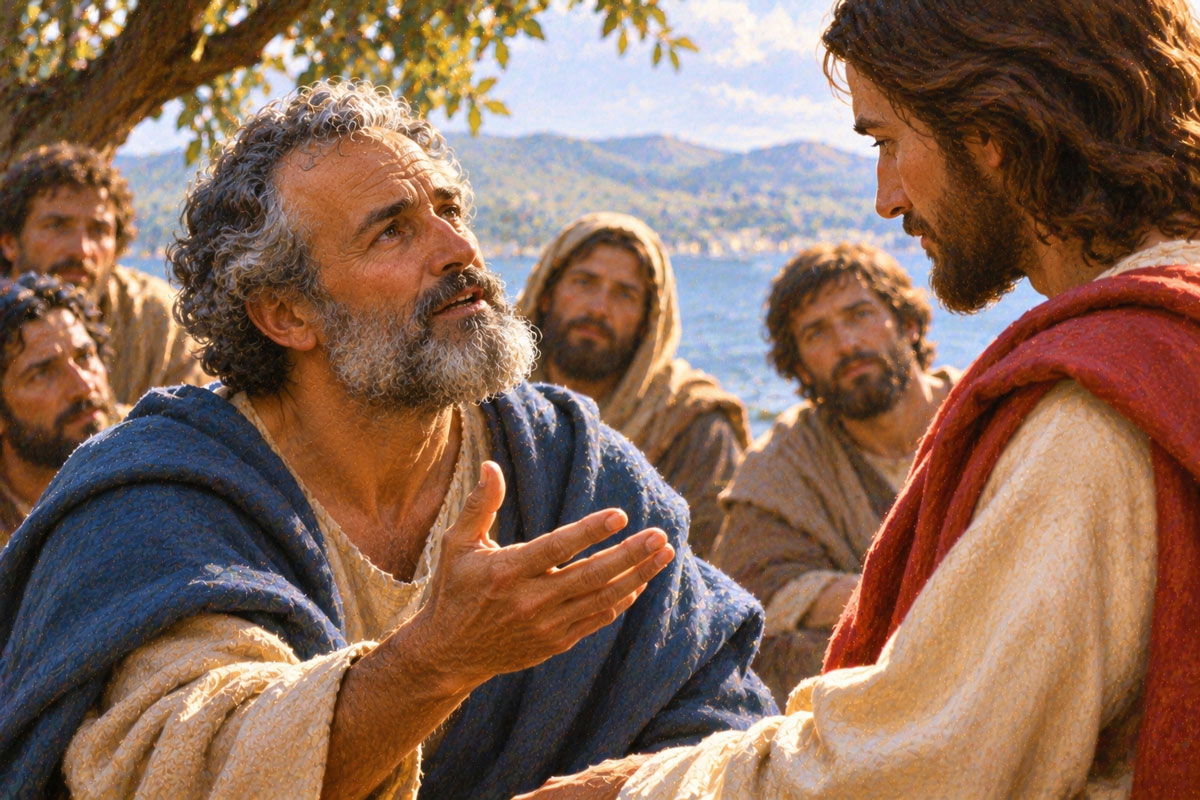
What Is Meant by “Lord, to Whom Shall We Go? You Have the Words of Eternal Life”?
“Lord, to whom shall we go? You have the words of eternal life.”
— St. Peter the Apostle, John 6:68
“Lord, to whom shall we go? You have the words of eternal life” is one of the most moving declarations of faith in the Gospel of John. Spoken by St. Peter during a moment of uncertainty, these words reveal a heart that recognizes Jesus as the source of eternal life, even when His teachings are difficult to understand.
Who Said “Lord, to Whom Shall We Go”?
These words were spoken by St. Peter the Apostle, one of the twelve apostles and a central figure in the early Church. The quotation appears in John 6:68, following Jesus’ teaching about the Bread of Life.
After hearing Jesus speak about giving His flesh as food and His blood as drink, many of His followers struggled to accept His words. Some turned away and no longer accompanied Him. Jesus then asked the Twelve whether they also wished to leave.
Peter answered with a declaration of faith: “Lord, to whom shall we go? You have the words of eternal life.” His response did not mean that he understood everything Jesus had taught. Rather, he recognized that no one else could offer what Christ alone possessed.
What Does “Lord, to Whom Shall We Go” Mean?
Peter’s words remind us that faith is not always accompanied by complete understanding. There are moments when God’s teachings challenge us, when our circumstances seem confusing, or when the path of discipleship becomes difficult. Yet faith invites us to remain with Christ because we trust in who He is.
St. Peter was not a perfect disciple. Throughout the Gospels, he displayed courage and devotion, but also fear, impulsiveness, and weakness. He would later deny knowing Jesus during the events surrounding the Crucifixion. Nevertheless, his life became a remarkable witness to repentance, forgiveness, and renewed faithfulness.
This makes his declaration especially meaningful. Peter did not follow Jesus because he had all the answers. He followed because he had come to believe that Jesus was the Holy One of God and that His words offered something the world could never provide.
The promise of eternal life is central to this passage. Jesus does not simply offer advice for living well. He offers communion with God and the hope of a life that extends beyond death. Peter’s response recognizes that this gift cannot be found apart from Christ.
Why This Quote Still Matters Today
Many believers experience seasons of doubt, disappointment, or spiritual uncertainty. Prayers may seem unanswered, difficult teachings may raise questions, and the demands of daily life can weaken our confidence.
St. Peter’s words offer encouragement during these moments. Rather than pretending that faith removes every question, his response invites us to remember why we began following Jesus. We remain with Him not because life is always easy, but because we believe His love and truth are worth trusting.
Peter’s example also reminds us that moments of weakness do not have to define our relationship with God. After his denial of Jesus, he encountered the mercy of the risen Christ and was entrusted with the responsibility of caring for His followers.
His journey teaches us that faith can be renewed, strengthened, and deepened through repentance and perseverance.
When we do not know where the road ahead will lead, we can remain with Christ, trusting that His words are the words of eternal life.
If you would like to reflect more deeply on the life and spiritual journey of St. Peter the Apostle, you are invited to explore our 30-day devotional,
Walking with St. Peter
— a daily journey of prayer, reflection, and spiritual renewal.


