
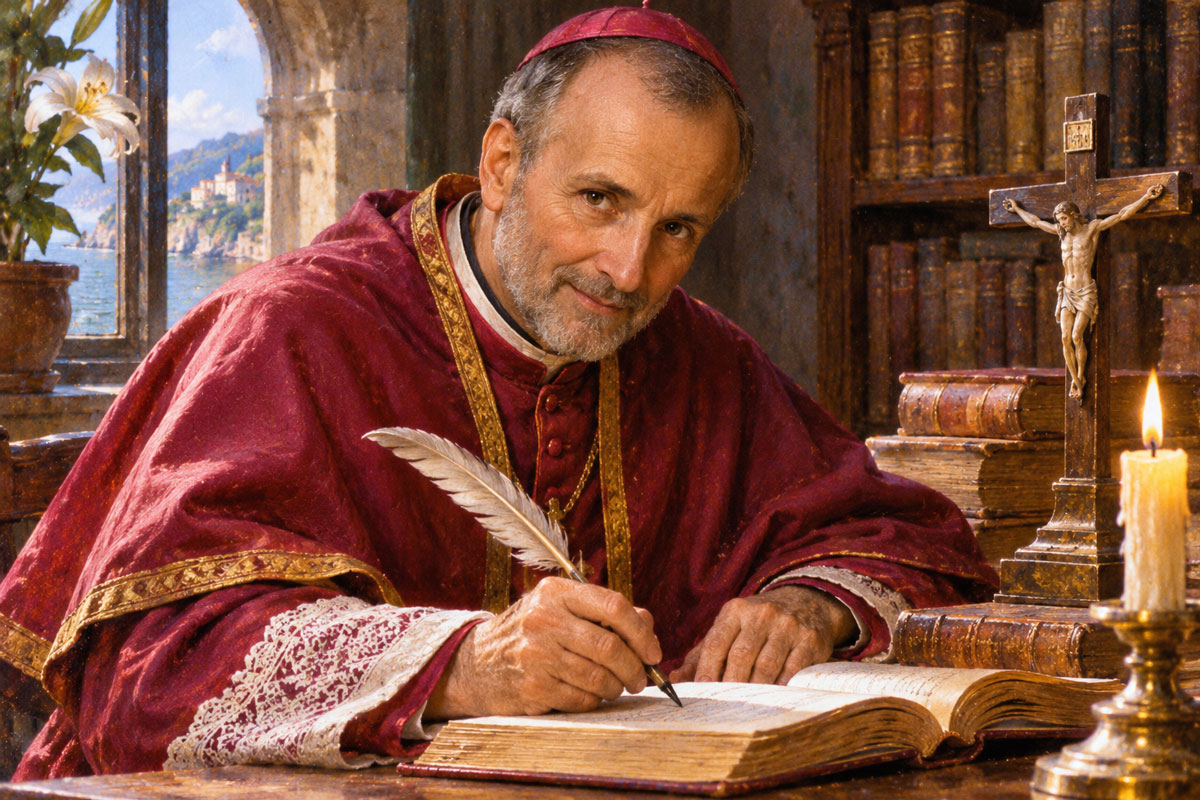
What Is Meant by “He Who Loves God Most Will Be the Happiest”?
“He who loves God most will be the happiest.”
— Inspired by the teachings of St. Alphonsus Liguori
“He who loves God most will be the happiest” expresses a beautiful truth found throughout the spiritual teachings of St. Alphonsus Liguori. These words remind us that lasting happiness is not found simply in wealth, success, or worldly recognition, but in a loving relationship with God. Through prayer, humility, and surrender to His will, we discover a deeper peace that circumstances alone cannot provide.
Who Is Associated with “He Who Loves God Most Will Be the Happiest”?
This saying reflects the spirituality of St. Alphonsus Liguori (1696–1787), an Italian bishop, theologian, and founder of the Congregation of the Most Holy Redeemer, commonly known as the Redemptorists.
Born near Naples, Italy, Alphonsus received an excellent education and became a successful lawyer at a young age. However, after experiencing a profound disappointment in his legal career, he began reconsidering the direction of his life.
Eventually, he left the legal profession and entered the priesthood, dedicating himself to preaching, hearing confessions, and helping people grow closer to God.
In 1732, Alphonsus founded the Redemptorists, a religious congregation devoted especially to preaching the Gospel among the poor and spiritually neglected.
He became one of the Church’s most influential spiritual writers, producing works on prayer, moral theology, devotion to the Blessed Virgin Mary, and the importance of conforming our lives to God’s will.
Although the exact wording of this saying is not established as a documented quotation, its message closely reflects his teachings about divine love and the happiness found in belonging entirely to God.
What Does “He Who Loves God Most Will Be the Happiest” Mean?
These words invite us to reconsider what genuine happiness means. We often associate happiness with comfort, achievement, financial security, or the fulfillment of personal desires. While these things can bring satisfaction, they cannot always provide lasting peace.
St. Alphonsus taught that the deepest fulfillment of the human heart comes through loving God and seeking His will. When our relationship with God becomes the center of our lives, our priorities begin to change.
Instead of measuring happiness only by what we possess or accomplish, we learn to recognize the value of prayer, gratitude, charity, and spiritual growth.
For Alphonsus, love of God was not merely an emotion. It was expressed through faithful choices, perseverance in prayer, compassion toward others, and a willingness to accept God’s guidance.
His teachings also remind us that loving God does not guarantee a life without suffering. Alphonsus himself experienced illness, opposition, disappointment, and personal difficulties. Yet he continued to emphasize the importance of trusting God’s love through every circumstance.
The happiness described in this saying is therefore deeper than temporary pleasure. It is the spiritual peace that grows when we recognize that our lives are held in God’s care.
Why This Quote Still Matters Today
Modern life often encourages us to pursue happiness through achievement, possessions, and constant activity. We may find ourselves believing that peace will finally arrive when we accomplish one more goal or overcome one more difficulty.
St. Alphonsus offers a different perspective. His spiritual teachings encourage us to seek happiness first through a relationship with God, rather than depending entirely upon changing circumstances.
This does not mean abandoning our responsibilities or the ordinary joys of life. Instead, it means approaching them with gratitude and allowing our love for God to shape the way we live.
We can practice this teaching through simple daily actions: making time for prayer, expressing gratitude for blessings, treating others with patience, and choosing what is right even when it requires sacrifice.
Alphonsus also emphasized the importance of trusting God’s will. When our plans do not unfold as expected, faith helps us remember that disappointment does not mean God has abandoned us.
His example reminds us that holiness and happiness are not opposing goals. A life rooted in divine love can become a source of genuine joy, even when it includes hardship and uncertainty.
The more deeply we love God, the more we discover a happiness rooted not in changing circumstances, but in His enduring presence.
If you would like to reflect more deeply on the life and spiritual teachings of St. Alphonsus Liguori, you are invited to explore our 30-day devotional, Walking with St. Alphonsus Liguori — a daily journey of prayer, reflection, and spiritual renewal.