What Is Meant by “I Have Seen the Lord”?
“I have seen the Lord.”
— St. Mary Magdalene, John 20:18
“I have seen the Lord” is one of the most joyful declarations in the New Testament. Spoken by St. Mary Magdalene after encountering the risen Jesus, these words proclaim the reality of Christ’s Resurrection and the hope that His victory over death brings to the world. Her testimony reminds us that even the deepest sorrow can be transformed by an encounter with the living Christ.
Who Said “I Have Seen the Lord”?
These words were spoken by St. Mary Magdalene, one of the most devoted followers of Jesus and an important witness to His death and Resurrection. The quotation appears in John 20:18, following her encounter with the risen Christ near the empty tomb.
According to the Gospel of John, Mary Magdalene came to the tomb early in the morning while it was still dark. Discovering that the stone had been removed, she hurried to tell Peter and the disciple whom Jesus loved. After they visited the tomb and departed, Mary remained outside, weeping.
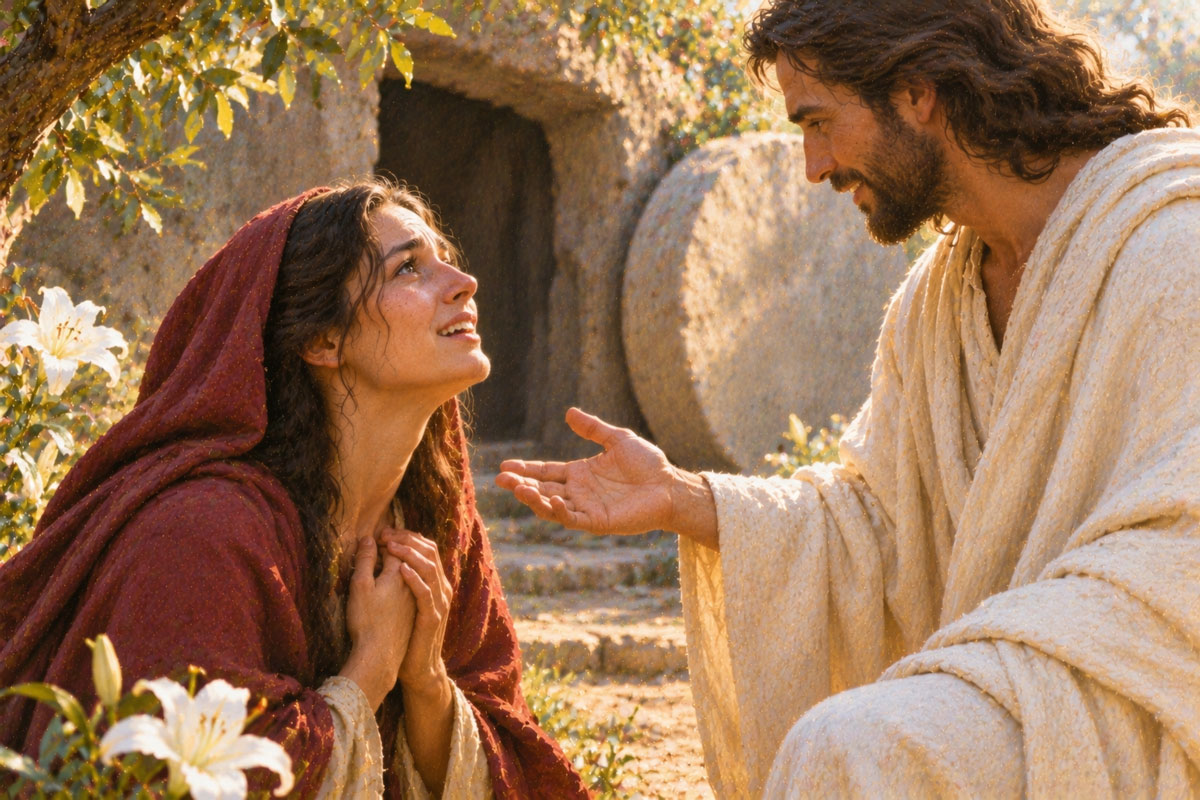
When Jesus appeared to her, she initially mistook Him for the gardener. It was only when He spoke her name that she recognized Him. Overwhelmed by the encounter, Mary received the instruction to go and tell His disciples what had happened.
She then announced the extraordinary news: “I have seen the Lord.” Because of her role in proclaiming the Resurrection to the apostles, Mary Magdalene has long been honored with the title Apostle to the Apostles.
What Does “I Have Seen the Lord” Mean?
These words express more than Mary’s personal joy at seeing Jesus alive again. They proclaim the central truth of Christianity: Christ has conquered death, and His Resurrection opens the way to eternal life.
Mary Magdalene’s journey from grief to recognition is especially meaningful. She approached the tomb expecting to mourn the loss of someone she loved. Instead, she encountered the risen Lord, who called her by name and transformed her sorrow into hope.
Her experience reminds us that God can be present even when we struggle to recognize Him. During times of sadness, disappointment, or uncertainty, we may feel that hope has disappeared. Yet the Resurrection assures us that suffering and death do not have the final word.
Mary’s response also reveals the importance of sharing our faith. She did not keep the good news to herself. Having encountered Christ, she immediately carried His message to the disciples. Her example encourages us to become witnesses to God’s love through our words, actions, and the hope we bring to others.
Why This Quote Still Matters Today
Many people experience moments when life feels overshadowed by loss, uncertainty, or unanswered questions. Mary Magdalene’s encounter with the risen Jesus offers a powerful reminder that hope can emerge even from the darkest circumstances.
Her story also teaches us the importance of remaining faithful when we do not yet understand what God is doing. Mary stayed near the tomb in her grief, and it was there that she encountered the risen Christ.
We may not see Jesus in the same way Mary did, but Christians are invited to encounter His presence through prayer, Scripture, the sacraments, and acts of love. Her testimony encourages us to remain attentive to the ways Christ continues to work in our lives.
Mary Magdalene’s declaration remains a message of joy and encouragement for every generation. The Resurrection is not simply an event remembered from the past. It is the foundation of Christian hope and the promise that God’s love is stronger than death.
The joy of Easter begins with the discovery that Christ is risen, and His love brings hope even where sorrow once seemed overwhelming.
If you would like to reflect more deeply on the life and spiritual journey of St. Mary Magdalene, you are invited to explore our 30-day devotional,
Walking with St. Mary Magdalene
— a daily journey of prayer, reflection, and spiritual renewal.