
What Is Meant by “Whatever You Did for One of the Least of These, You Did for Me”?
“Whatever you did for one of the least of these brothers and sisters of mine, you did for me.”
— Jesus Christ, Matthew 25:40
“Whatever you did for one of the least of these, you did for me” is one of the most powerful teachings of Jesus Christ about charity and compassion. These words remind us that serving those who are poor, sick, forgotten, or vulnerable is an expression of love for Christ Himself. The extraordinary life of St. Martin de Porres offers a beautiful example of this teaching lived through humility, generosity, and faithful service.
Who Said “Whatever You Did for One of the Least of These”?
These words were spoken by Jesus Christ in Matthew 25:40, during His teaching about the final judgment. Jesus explains that acts of kindness toward those in need are acts of love offered to Him.
The passage describes feeding the hungry, welcoming strangers, clothing those in need, caring for the sick, and visiting prisoners. Through these examples, Jesus reveals that genuine faith must be expressed through practical compassion.
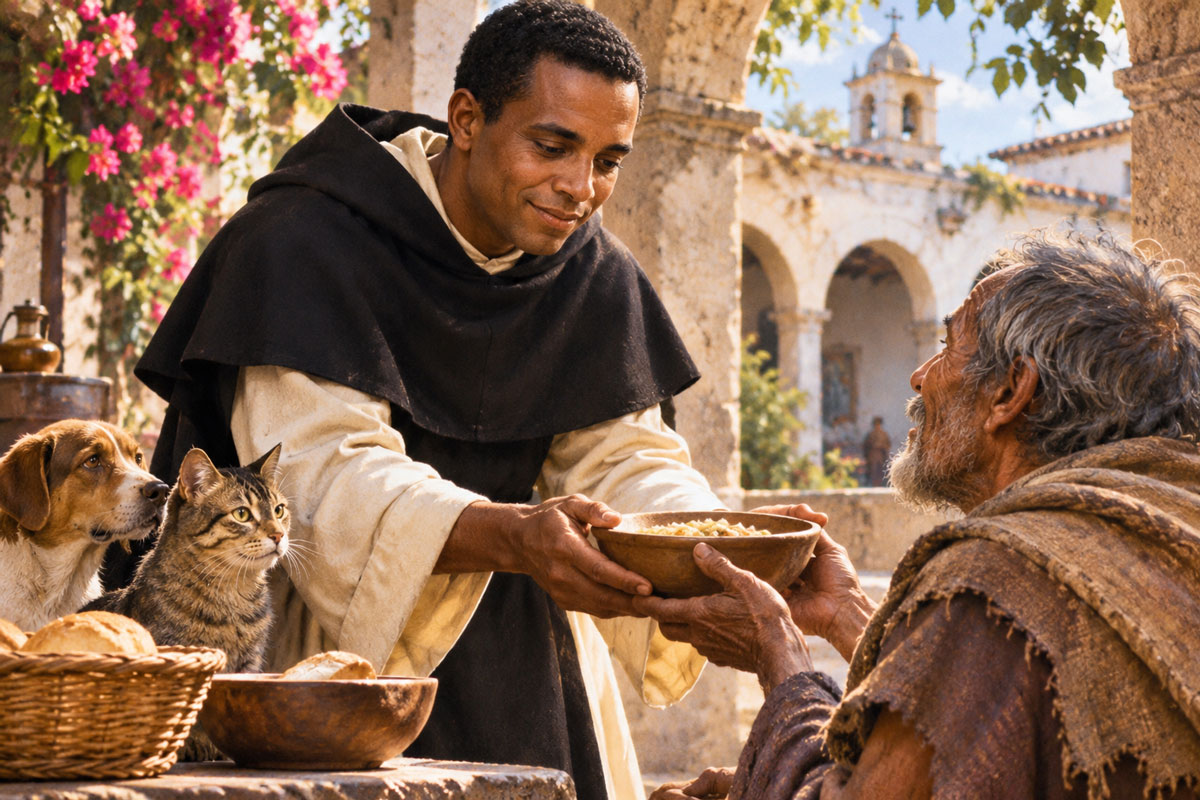
This teaching is especially meaningful when considered through the life of St. Martin de Porres (1579–1639), a Dominican lay brother from Lima, Peru, who dedicated his life to serving the poor, the sick, and those rejected by society.
Born to a Spanish father and a mother of African descent, Martin experienced discrimination and social hardship during his early life. Nevertheless, he developed a remarkable spirit of humility and compassion.
After entering the Dominican community in Lima, Martin became known for his work caring for the sick, assisting the poor, and performing humble duties within the monastery. His kindness extended across social divisions, reflecting his belief in the dignity of every human being.
What Does “Whatever You Did for One of the Least of These” Mean?
These words teach that our love for God cannot be separated from our treatment of other people. Jesus identifies Himself with those who suffer, reminding us that every person possesses dignity and deserves compassion.
St. Martin de Porres understood this teaching through the way he lived. He did not seek recognition or importance. Instead, he devoted himself to meeting the needs of those around him, often through simple and unnoticed acts of service.
His work caring for the sick was especially significant. Martin had learned practical medical skills before entering religious life, and he used this knowledge to assist people who might otherwise have received little care or attention.
His compassion was not limited by wealth, social position, or background. He treated those in need with kindness and respect, recognizing that every person was worthy of love.
The teaching of Matthew 25 also reminds us that holiness is not measured solely by prayer or religious observance. Prayer is essential to Christian life, but its fruits should become visible through mercy, generosity, and concern for others.
We may not have extraordinary resources or opportunities, but we can still offer something meaningful. A meal shared with someone who is hungry, a visit to someone who is lonely, or a helping hand offered without expectation of reward can become an expression of Christ’s love.
Why This Quote Still Matters Today
In a world where people can easily become overlooked or forgotten, the example of St. Martin de Porres remains deeply relevant. His life challenges us to recognize the dignity of those who may be ignored because of poverty, illness, social circumstances, or prejudice.
Jesus’ words invite us to look beyond appearances and recognize the human needs around us. Compassion begins when we become attentive to others rather than remaining focused entirely on our own concerns.
Martin’s example also reminds us that service does not need to be dramatic to be meaningful. Much of his work involved ordinary responsibilities performed with extraordinary love. His willingness to care for others transformed simple duties into acts of Christian charity.
We can follow his example by offering encouragement to someone who is struggling, helping a neighbor, volunteering our time, or showing patience toward those who need understanding.
The message of Matthew 25:40 is ultimately an invitation to encounter Christ through love. Every act of sincere compassion becomes an opportunity to reflect His presence in the world.
When we serve others with humility and love, we are responding to Christ Himself, who calls us to recognize His presence in those most in need.
If you would like to reflect more deeply on the life and spiritual example of St. Martin de Porres, you are invited to explore our 30-day devotional,
Walking with St. Martin de Porres
— a daily journey of prayer, reflection, and spiritual renewal.