What Is Meant by “Only Love Creates”?
“Only love creates.”
— St. Maximilian Kolbe
“Only love creates” is a powerful saying associated with St. Maximilian Kolbe, the Polish Franciscan priest and martyr whose extraordinary sacrifice during the Second World War became a lasting witness to Christian charity. These simple words express a profound spiritual truth: while hatred, selfishness, and cruelty bring destruction, genuine love builds, restores, and gives life.
Who Said “Only Love Creates”?
This saying is widely attributed to St. Maximilian Kolbe (1894–1941), a Polish Franciscan priest remembered for his devotion to the Virgin Mary, his missionary work, and his remarkable act of self-sacrifice at Auschwitz.
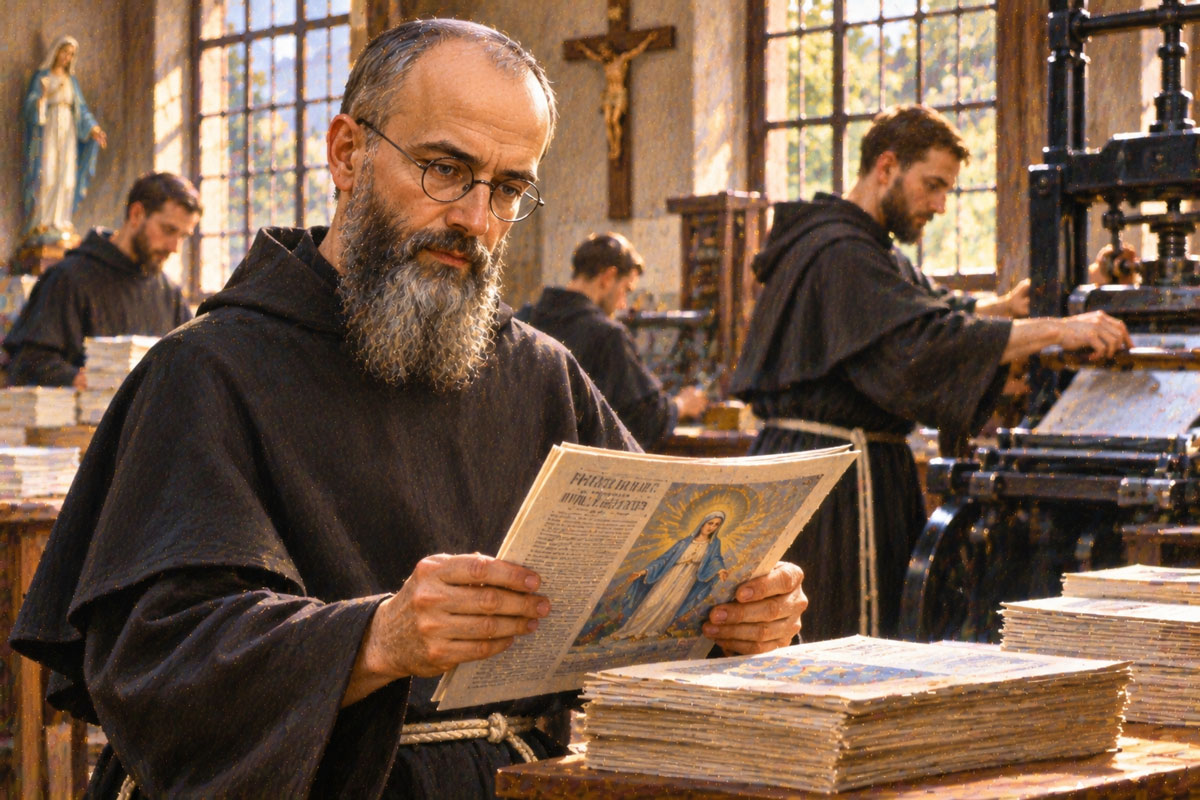
Before the Second World War, Kolbe established the Franciscan community of Niepokalanów in Poland, where he used publications and other forms of communication to spread the Catholic faith. He also spent time as a missionary in Japan, sharing his devotion to Christ and the Blessed Virgin Mary.
Following the German occupation of Poland, Kolbe was arrested and eventually imprisoned at Auschwitz. In 1941, after a prisoner escaped, ten men were selected to die by starvation as punishment. When one of the selected prisoners, Franciszek Gajowniczek, cried out for his wife and children, Kolbe volunteered to take his place.
His offer was accepted, and he was sent to the starvation bunker, where he encouraged fellow prisoners through prayer. After surviving for approximately two weeks, he was killed by a lethal injection on August 14, 1941.
His final act of charity became an extraordinary testimony to the belief that love can remain powerful even in the presence of profound cruelty and suffering.
What Does “Only Love Creates” Mean?
These words remind us that love possesses a creative and life-giving power. Genuine Christian love does more than express affection. It builds relationships, restores dignity, encourages forgiveness, and creates opportunities for goodness where selfishness or hatred might otherwise prevail.
St. Maximilian Kolbe demonstrated this truth through both his daily ministry and his final sacrifice. His work as a priest, missionary, and publisher was motivated by a desire to bring others closer to Christ. He believed that faith should be expressed through active concern for the spiritual and physical well-being of others.
At Auschwitz, Kolbe faced a world in which human dignity was systematically denied. Yet his decision to offer his life for another prisoner was an act of love that refused to accept cruelty as the final measure of human existence.
His sacrifice did not erase the suffering around him, but it revealed that compassion and selflessness could endure even under the most terrible circumstances. By choosing to protect another man’s life, Kolbe demonstrated that love remains meaningful even when worldly power appears overwhelming.
The saying also challenges us to consider the influence of our everyday actions. Words spoken with kindness can encourage someone who is discouraged. Forgiveness can begin healing a damaged relationship. Generosity can restore hope to someone facing hardship.
In these ordinary ways, love continues to create something good in the world.
Why This Quote Still Matters Today
In a world often marked by division, anger, and indifference, St. Maximilian Kolbe’s message remains deeply relevant. His life reminds us that responding to hatred with more hatred only continues the cycle of destruction, while acts of compassion can open the possibility of healing and reconciliation.
Most of us will never face the extraordinary circumstances Kolbe encountered, but we are presented with daily opportunities to choose love over selfishness. We can respond patiently when frustrated, offer help without expecting recognition, and treat others with dignity even when we disagree.
Kolbe’s example also reminds us that love requires courage. Genuine charity sometimes involves sacrifice, discomfort, or the willingness to place another person’s needs before our own.
His devotion to Christ and the Blessed Virgin Mary shaped a life dedicated to service, prayer, and generosity. Through his witness, we are reminded that holiness is not merely found in extraordinary moments, but in the faithful practice of love throughout our lives.
Hatred may destroy what is good, but love continues to build, restore, and bring hope into the world.
If you would like to reflect more deeply on the life and extraordinary witness of St. Maximilian Kolbe, you are invited to explore our 30-day devotional,
Walking with St. Maximilian Kolbe
— a daily journey of prayer, reflection, and spiritual renewal.